Making an original character (OC) is one of the most fun creative projects there is. You get to decide everything: who they are, what they look like, what they want and what they're hiding. But a blank page can be intimidating. This guide breaks the process into eight simple steps you can follow in an afternoon.
New to the term? Read what an OC is first.
Step 1: Decide what your OC is for
Before anything else, ask where your character will live:
- A story or comic needs a character with a clear goal and room to change.
- Roleplay or a tabletop game needs a character who can react to many situations and work with others.
- Art and design practice needs a strong, recognizable visual identity.
- A VTuber or streaming persona needs a personality you can perform comfortably for hours.
Knowing the purpose helps you decide which details matter most.
Step 2: Start with a one-sentence concept
Write your OC as a single sentence that combines a role with something unexpected:
- "A royal knight who is secretly afraid of horses."
- "A cheerful barista who is a retired assassin."
- "A robot who wants to become a gardener."
The unexpected part is what makes people curious. If you're stuck, borrow one from our list of 100 OC ideas or roll a random concept with the OC Generator.
Step 3: Give them a goal, a fear and a flaw
These three details turn a concept into a character:
- Goal: what they want. ("Become the youngest captain in the guard.")
- Fear: what they're afraid of. ("Being seen as weak, like their father.")
- Flaw: what gets in their way. ("They refuse to ask for help.")
Notice how the three connect. The fear explains the flaw, and the flaw makes the goal harder. When these pieces fit together, your OC starts to feel real.
Step 4: Build a personality
Choose three words that describe your character, then add one contradiction. "Loyal, stubborn, funny, but terrible at keeping promises." Contradictions make characters feel human.
Then think about behavior, not just traits:
- How do they act when they walk into a room full of strangers?
- What do they do when they're angry?
- What do they say when someone compliments them?
Our OC template includes 60 questions that help you dig deeper.
Step 5: Design their appearance
A good character design is readable at a glance. Focus on:
- Silhouette. Could you recognize them from their shadow? Distinct hair, clothing shapes or accessories help.
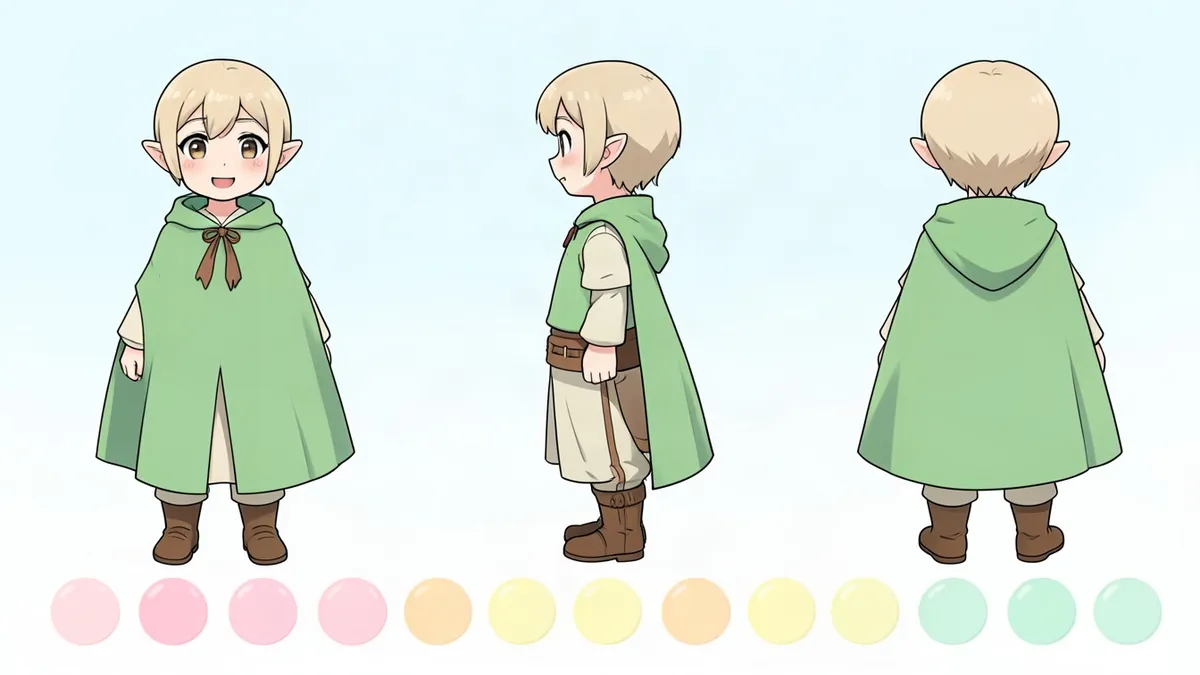
- Color palette. Pick three to five main colors. Warm colors feel energetic or friendly; cool colors feel calm or mysterious.
- One signature detail. A scarf, a scar, mismatched eyes, a weapon or a pet makes your OC memorable.
- Clothes that tell a story. A worn-out coat says something different than a perfect uniform.
Can't draw? Describe your character in the Character Creator, including hair, eyes, outfit, colors and that signature detail, and it will draw a portrait for you. Try a few variations until the design clicks. For anime-style characters, use the Anime Character Creator.
Step 6: Write a short backstory
Keep the first version short: three to five sentences. Answer:
- Where did they come from?
- What happened that shaped who they are?
- Why are they where they are now?
Avoid giving your OC a tragic past just for drama. A backstory works best when it explains their goal, fear and flaw. A character who grew up the youngest of seven siblings and never got noticed might want to be famous. That's simpler and more relatable than a dramatic tragedy.
Step 7: Connect them to other people
Characters come alive through relationships. Give your OC at least:
- Someone they love (a friend, a sibling, a mentor, a pet)
- Someone they clash with (a rival, a strict parent, an annoying coworker)
- Someone they owe something to
These connections create instant story ideas.
Step 8: Test your OC
Put your character in a few situations and see how they react:
- They find a wallet full of money on the street.
- Their best friend lies to them.
- They are given the chance to achieve their goal by cheating.
If you instantly know what they would do, your OC is ready. If you don't, go back to their goal, fear and flaw.
Common OC mistakes to avoid
- Making them perfect. A character who is good at everything and loved by everyone is boring. Give them real weaknesses that cost them something.
- Too many special features. Heterochromia, wings, a tragic past, royal blood and secret powers all at once is a lot. Pick one or two.
- Copying a favorite character too closely. Inspiration is great, but change enough that the character stands on their own.
- Forgetting personality. A great design without a personality is just a costume.
Make your OC in minutes
Want to skip ahead? Open the Character Creator, describe your idea in one sentence, and get a full character portrait with a name, personality and backstory. Then use this guide to refine the details until the character feels like yours.
FAQ
How do I make an OC if I can't draw?
Focus on personality and story first, then use a character creator to visualize them. Describe your OC's appearance in words, generate a portrait, and adjust the description until it looks right. Many writers never draw their characters at all.
How long does it take to make an OC?
You can create a basic OC in an hour. Developing a character fully, with a detailed backstory, relationships and a reference sheet, can take weeks of writing and drawing. Most OCs keep growing for years.
What makes an OC interesting?
A clear goal, a real flaw and one surprising detail. Readers are interested in characters who want something and struggle to get it.
Can my OC be based on me?
Yes. That's called a self-insert or a sona, and it's very common. Many creators start by imagining themselves in a different world and then let the character grow into their own person.
How do I name my OC?
Choose a name that fits the setting and the character's background, then say it out loud. Short, distinct names are easier to remember. Avoid names that are already famous characters.