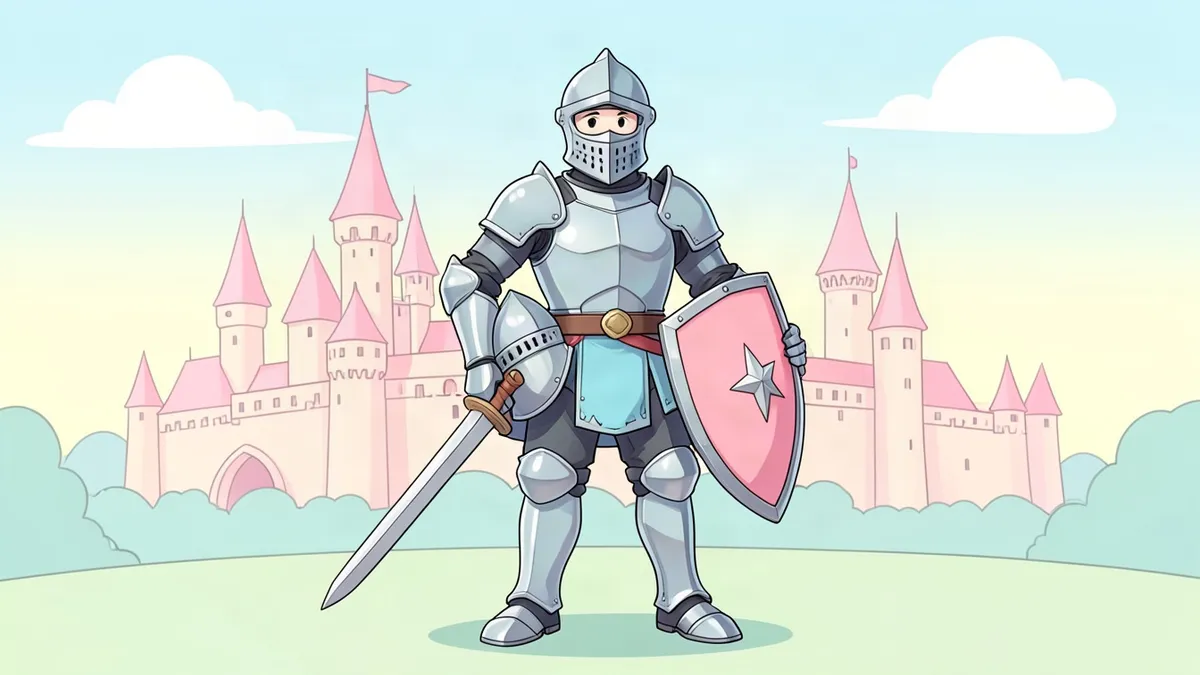
Knight names have three moving parts: a title, a given name and something that sets this knight apart from the forty others at the tournament. This list has 88 knight names. The given names are real medieval ones; the epithets, houses and orders are invented, so you can mix them freely.
For more ideas in a medieval style, try the fantasy name generator.
Given names in the first two lists were in real use in medieval Europe. Epithets, surnames and orders are our own inventions.
Men's names from the eleventh to fourteenth centuries.
- Fulk: short, blunt and common among Norman lords
- Odo: two letters repeated, very eleventh century
- Ranulf: a Norman favorite
- Gervase: gentler, for a knight who reads
- Warin: an old form that later became Warren
- Piers: the medieval English form of Peter
- Thibault: the French form of Theobald
- Amaury: a French name carried by crusader-era lords
Bertrand, Conrad, Everard, Hamon, Ingram, Lambert, Reynold, Savaric, Hugh, Aldous, Giles, Osbern
Women's names from the same period. In fantasy, a woman who is knighted is usually styled Dame, or simply Sir.
- Alienor: the older spelling of Eleanor
- Hawise: common in Norman England, rare now
- Petronilla: long and formal, good with a blunt surname
- Avice: two syllables, easy to shout
- Idonea: rare even then
Clarice, Emmeline, Joan, Richenda, Agnes, Ysabel, Amice, Cecily, Margery, Philippa, Rohese
An epithet turns a common name into a main character.
- Sir Hamon the Unhorsed: lost one joust twenty years ago and still hears about it
- Dame Avice of the Long Road: a knight errant who never went home
- Sir Odo Half-Shield: left-handed and proud of it
- Sir Ingram Rookwarden: holds a tower no one else wants
- Dame Ysabel the Lantern: always takes the night watch
- The Knight of Thistles: fights under a plain green shield
Sir Bertrand of Ashenford, Dame Cecily Ironvow, Sir Giles the Younger, Sir Lambert Stormgate, Dame Joan Hartshield, Sir Everard of the Marches, Dame Emmeline Graycloak, Sir Conrad Elmhand, Sir Aldous the Patient, Dame Philippa Rivenhall
- Sir Morcant the Unshriven: never asks forgiveness
- The Ashen Knight: no name, no crest, no face
- Dame Isaude Thornhelm: wears her enemies' colors as a warning
- Lord Mordaunt the Hollow: more armor than man
Sir Garran Duskblade, The Knight of Crows, Sir Brennard Gravewatch, Dame Morwyth Coldiron, Sir Uthric the Oathless, The Iron Vigil, Sir Halbrecht Ravensworn, Dame Ysmeine Nightfall
- Greywater: a river house with more bridges than castles
- Valemont: sounds French and owns vineyards
- Thornhallow: a border keep that has never been taken
- Order of the Silver Stag: a hunting club that turned military
- Knights of the Long Vigil: sworn to guard a single bridge forever
Ashenford, Brightlance, Calderwick, Dunmarrow, Elmcourt, Fairmantle, Harrowmere, Ironvale, Kingsmark, Oakenward, Whitlance
- Sir Render: always the first to give up
- Sir Prize: nobody sees him coming
Sir Plus, Sir Tified, Sir Real, Sir Mount, Sir Charge, Sir Veillance
Use this frame: title + given name + one identifier.
Title. Sir for men. Dame is the usual match for women, though many fantasy settings use Sir for everyone. Lord and Lady are for knights who also hold land.
Given name. Pick one from the right region for your setting. Norman and French names (Fulk, Thibault, Alienor) sound like tournaments and castles. Germanic ones (Conrad, Everard) sound sterner. Stick to one region per kingdom.
Identifier. Choose one of four kinds:
- A place: of Ashenford, of the Marches. Reliable and plain.
- A house: a color, animal or weapon plus a land feature. Grey + water, Bright + lance, Thorn + hallow.
- An epithet from a deed or a flaw: the Unhorsed, the Patient, Half-Shield. One event, summed up in a word.
- A heraldic title with no name at all: The Knight of Thistles. Good for mysteries.
Tie the name to the shield. If the house is Hartshield, there's a stag on it. If the knight is of Thistles, the shield is green. Readers remember the picture and the name together.
- Don't give every knight an epithet. Save them for the three or four characters who matter.
- Match the name to the world. Sir Kyle works in a comedy and nowhere else.
- Let villains have plain names sometimes. The Ashen Knight is frightening; so is a quiet man called Sir Hugh.
- Legendary knights are free to use, but everyone knows them. A new name reads as more original.
See warrior names for fighters without a title, kingdom names for the crown they serve and male fantasy names for the rest of the court. The fantasy name generator can roll more in an ancient or elegant style.
Sir Hamon the Unhorsed, Dame Avice of the Long Road and Sir Ingram Rookwarden. Start with a real medieval name and add a place, a house or an epithet.
Alienor, Hawise, Avice, Cecily, Philippa and Rohese were all real medieval names. Add Dame or Sir and a house name.
Either a title with no name, like The Ashen Knight, or a dark epithet on an ordinary name, like Sir Morcant the Unshriven.
The famous ones come from legend, especially the old Round Table stories. They're free to use, but instantly recognizable, so most writers invent new ones.