The best tragic backstory examples share one thing: the sad event isn't the point. The point is what it left behind, such as a habit, a fear or a rule the character lives by. Here are 14 original examples in four groups, each with the mark it leaves. None of them needs graphic detail, and yours won't either.
What makes a tragic backstory work
- One wound. A character with five tragedies has none, because the reader stops counting.
- Aftermath over event. Spend one line on what happened and the rest on what changed.
- The character had a part in it. A choice, even a small one, gives them something to carry besides bad luck.
Loss
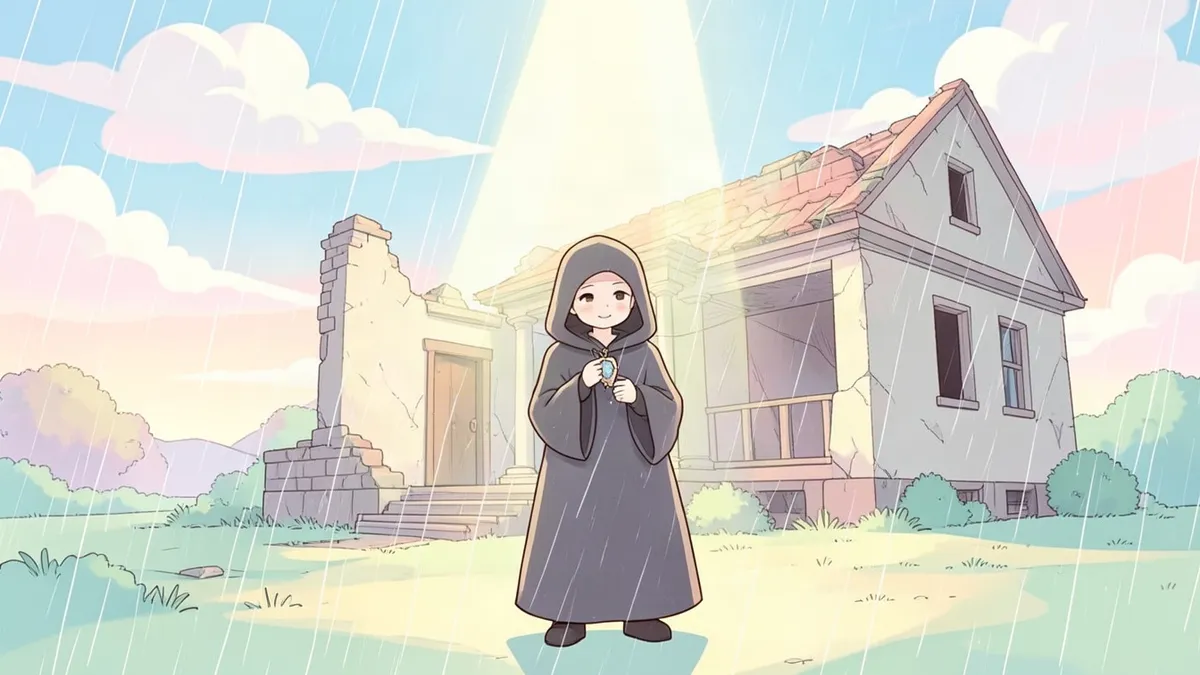
1. The lighthouse. Her father kept the light. One winter he rowed out to a stranded boat and didn't return. She was twelve, and she kept the lamp burning alone for a month. Now: she can't leave a job unfinished or ask for help.
2. The orchard. A blight took the family orchard in one summer, and the family scattered to find work. Now: he carries seeds in his coat and plants one wherever he stops. He never stays to see it grow.
3. The duet. Her singing partner, her best friend since childhood, died of an illness the winter before their first big performance. Now: she still performs, but she only sings harmony and leaves the melody empty.
4. The letters. His younger brother wrote every week, and then the letters stopped. He came home to find the town relocated after a flood, with no forwarding address. Now: he reads every notice board in every town.
Exile
5. The false vision. A young temple novice announced a vision of a good harvest. The harvest failed, and the village needed someone to blame. Now: she never states anything as certain, even when she's sure.
6. The border. A treaty moved the border while he was away at school. His home ended up on the far side, and nobody could cross. Now: he speaks a dialect with no country and corrects every map he sees.
7. The empty chair. She refused the marriage that would have saved the family business. Nobody shouted. They stopped setting her place at the table. Now: she's generous with money she doesn't have and can't stand owing anyone.
8. The second ship. During an evacuation he gave his seat to a stranger's child and took the next ship, which went somewhere else. Now: he counts heads in every group, twice.
Betrayal
9. The signature. Her teacher published her research under his own name, and she had no proof. Now: she works alone, dates and signs every page, and flinches at praise.
10. The open gate. His closest friend opened the city gate to the enemy in exchange for his own family's safety. The city surrendered without a fight. Now: he understands why, which is the hard part, and he trusts slowly.
11. The dock. Her crew left her at the dock to take the blame for a smuggling run, and she spent four years in prison. Now: she always knows where the exits are and pays her debts early.
Guilt
12. The bridge. He approved a bridge to meet a deadline. It failed in a spring flood and people were hurt. The inquiry cleared him. Now: he checks everything three times and hesitates before signing his name.
13. The choice. Two patients, and medicine for one. She chose the younger. The other was her teacher. Now: she avoids being the one who decides, even when she knows best.
14. The clear day. He promised to bring his grandmother home to the coast one last time and waited for better weather. She passed away inland, on a perfectly clear day. Now: he never puts anything off, to a fault.
How to adapt these tragic backstory examples
Keep the mechanism and change the surface. Each example runs event, belief, behavior. The lighthouse keeper's daughter learned "nobody is coming," so she never asks for help. Move her to a space station or a family restaurant and the chain still holds. Our character backstory ideas article breaks this into a four-part formula you can reuse.
Keeping it from turning into melodrama
- Tell it plainly. The shortest version usually hits hardest.
- Let them be funny. People with sad histories still joke, cook dinner and get annoyed by small things.
- Don't make it an excuse. A painful past can explain bad behavior. It shouldn't erase it.
- Treat heavy subjects with care. If your story touches on harm that real people live through, ask whether the story needs it, and leave out the detail.
- Ration it. If everyone in the cast has a tragedy, none stands out. An ordinary childhood is a fine contrast.
Get a draft to work from
The Backstory Generator has a tragic tone setting. Give it a name, a role and a genre, and it writes a history with a turning point, a fear and a secret that you can edit. New to the term? Start with what a backstory is.
FAQ
What is a tragic backstory?
It's a character history built around a painful event, such as a loss, an exile or a betrayal, that still shapes how the character thinks and acts.
What are some good tragic backstory examples?
A lighthouse keeper's daughter who kept the lamp lit alone, an heir quietly cut off by her family, or an engineer cleared of blame who can't forgive himself.
How do I write a tragic backstory that isn't cliche?
Use one specific event, keep the telling short, and focus on the habit or belief it left behind. Small, concrete losses often feel fresher than grand ones.
Does every character need a tragic backstory?
No. Many strong characters have ordinary pasts. Use tragedy for the characters whose present behavior needs that kind of explanation.