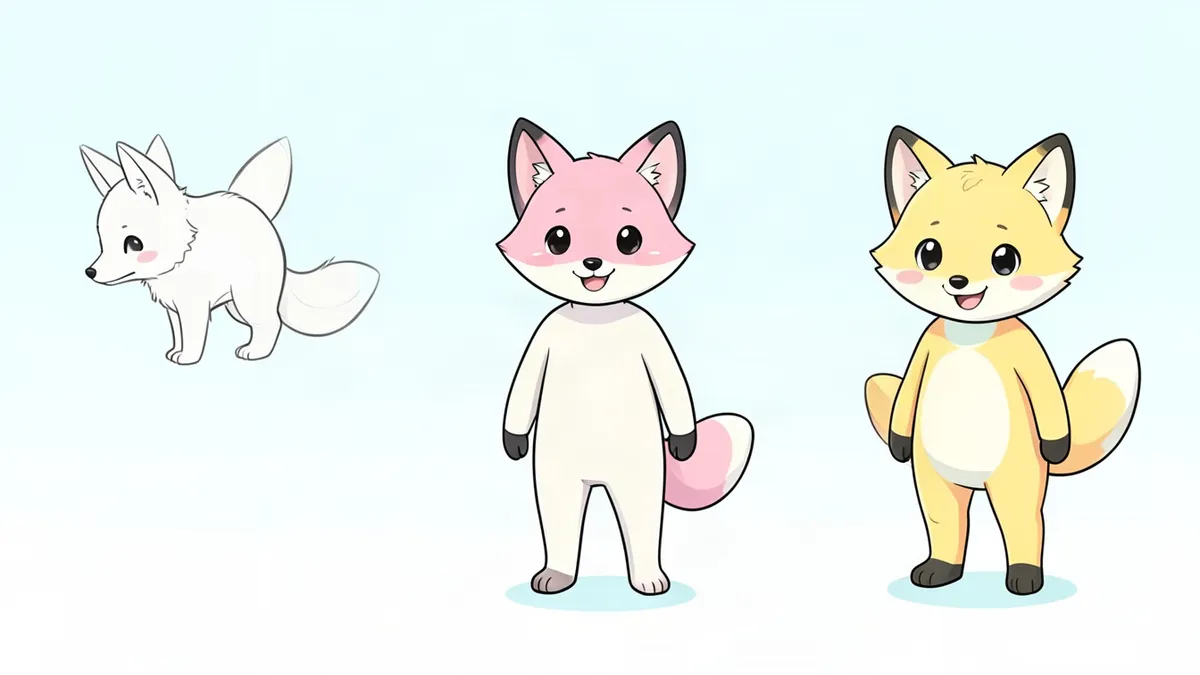
Learning how to make a fursona is mostly a series of small choices: which animal, which colors, what kind of person they are. You don't need to be an artist, and you don't need to get it right the first time. Most people revise theirs for years. This guide takes you through six steps, then shows three ways to get the design on paper, including how a fursona base works.
How to make a fursona in six steps
Step 1: Pick a species
Start with the animal you'd happily look at every day. There are three common ways to choose:
- By feeling. The animal you've always been drawn to.
- By personality. A loyal dog, a curious raccoon, an independent cat.
- By design. The animal with features you want to draw: big ears, a long tail, horns.
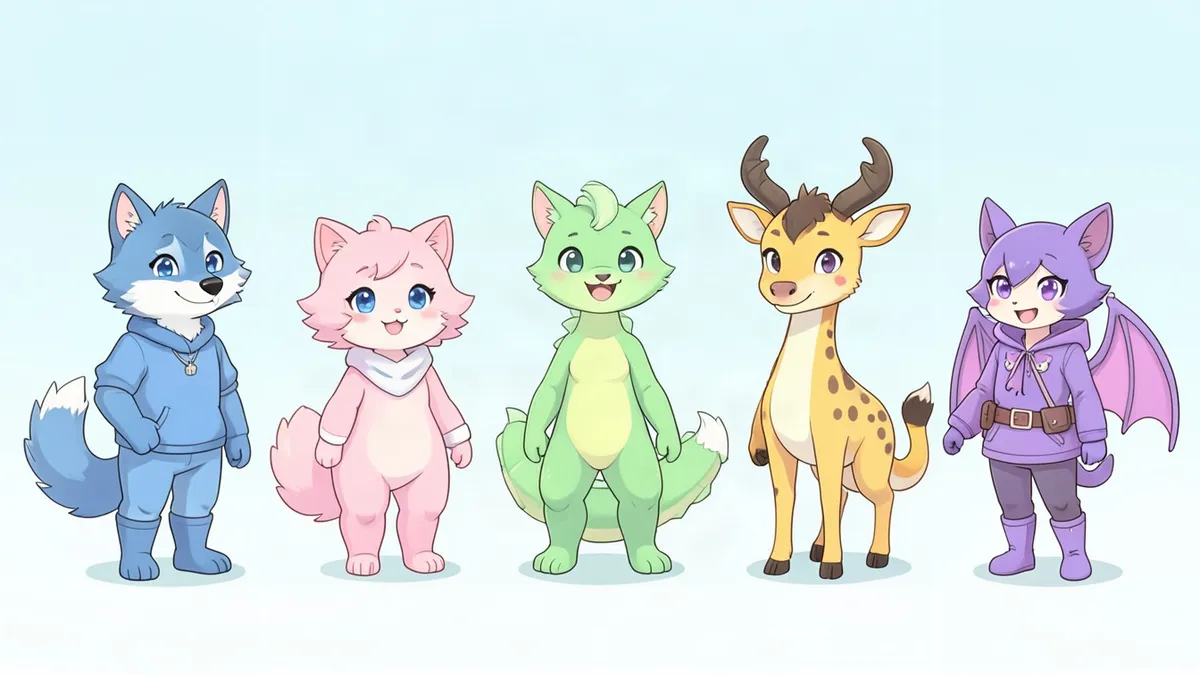
Can't pick one? Make a hybrid. A fox with deer antlers or a cat with a shark tail is completely normal. Our fursona species guide lists the options, and the fursona quiz can narrow it down.
Step 2: Choose a color palette
Limit yourself to three to five colors:
- A main body color
- A secondary color for the belly, muzzle or paws
- An accent for markings
- An eye color
- Optionally, one bright pop for hair tips, paw pads or inner ears
Natural palettes (rust, cream, charcoal) feel grounded. Unnatural ones (mint, lilac, hot pink) feel playful. Either works. What matters is contrast, so the markings show up against the base.
Step 3: Add markings
Markings make a fursona recognizable. Pick one hero marking and one or two quiet ones:
- Socks or gloves on the paws
- A face mask or blaze down the nose
- Stripes, spots or freckles
- A tail tip in the accent color
- A shape that means something to you, like a star on the shoulder
Keep them simple enough to redraw. A marking you can describe in five words is one an artist will get right.
Step 4: Decide the build and style
- Anthro or feral? Upright and human-shaped, or four-legged like the real animal.
- Body type. Tall and lanky, short and round, broad, tiny. Give them a shape, not a default.
- Fluff level. Sleek, scruffy or very fluffy cheeks and tail.
- Art style. Toony, anime, semi-realistic or chibi.
Step 5: Give them a personality
Write three traits, one flaw and one habit. For example: "Friendly, stubborn, easily distracted. Overpacks for every trip. Hums when nervous." That's enough for an artist to choose a pose and an expression. Need help? Browse our list of character personality traits.
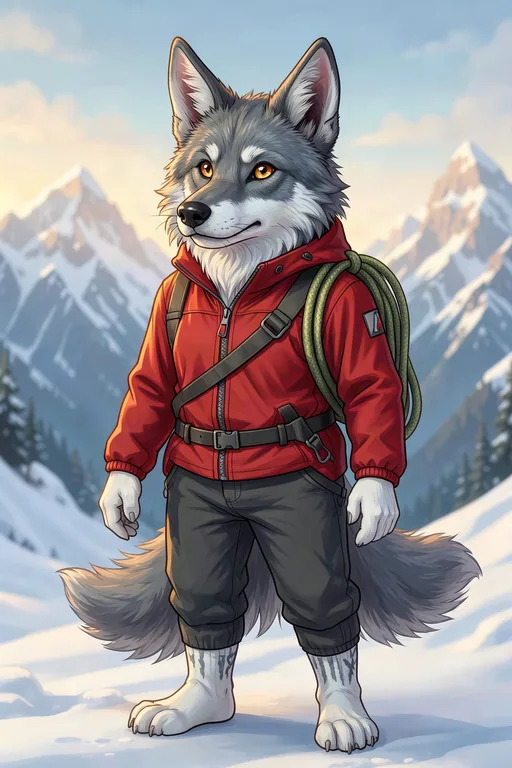
Then add one or two accessories that show the personality: a toolbelt, a flower crown, a worn baseball cap.
Step 6: Name your fursona
Try a few directions and say them out loud:
- A regular name you like (Theo, Mina)
- A nature word (Bramble, Slate, Clover)
- A food (Mochi, Pepper, Biscuit)
- A sound or made-up word (Zuri, Koda, Vex)
Search the name with your species before settling, so you don't accidentally match a well-known character.
Three ways to get your fursona drawn
Draw it yourself
Sketch a front view in a neutral standing pose. Block in the body with circles and ovals, add the muzzle, ears and tail, then lay down flat colors before any shading. It doesn't have to be good. It has to be clear.
Use a fursona base
A fursona base is blank line art of an animal character in a set pose. You color it, add your markings and draw hair or accessories on top. Bases are how many beginners make their first design and their first ref sheet.
A few rules of the road:
- F2U and P2U. "Free to use" bases cost nothing. "Pay to use" bases are sold by the artist.
- Credit the base maker. Nearly all of them ask for it.
- Read the rules. Some bases can't be used for designs you sell. Most can't be reposted blank.
- Don't trace finished art. A base is made to be drawn on. Someone's commission is not.
The Fursona Maker has a base option as well. It creates clean line art in your species and pose for you to color yourself.
Generate it
If you'd rather see the design straight away, the Fursona Maker draws full-color, all-ages character art from your choices. You pick the species, an optional second species for a hybrid, colors, markings and an art style, then describe the personality, clothing and accessories. It also suggests names. Run it a few times and change one thing per try.
Finish with a ref sheet
Once you like the design, put it on a reference sheet with front and back views and color swatches. It keeps the character consistent across artists. See how in our fursona ref sheet guide.
Mistakes to avoid
- Too many colors. Seven colors and four patterns blur together.
- Copying another person's fursona. Inspiration is fine. Matching someone's species, palette and markings is not.
- Waiting for perfect. Version one is supposed to change.
FAQ
How do I create a fursona if I can't draw?
Use a base, commission an artist or use a maker tool. A written description with a species, three to five colors, markings and a few personality traits is enough for any of those.
What is a fursona base?
It's blank line art of an animal character that you color and customize. Bases are either free to use or pay to use, and most require credit to the artist who made them.
How do I choose my fursona species?
Pick the animal you feel connected to, the one that matches your personality or simply the one you like the look of. If two fit, combine them into a hybrid.
Can I change my fursona later?
Yes. Redesigns, new palettes and even species changes are common. Many people keep old versions as part of the character's history.