A VTuber model is the digital puppet a virtual streamer wears on screen. It isn't a video and it isn't a single picture. It's a character built so that software can move it in real time while a camera watches your face. This guide explains the two kinds of VTuber model, what's inside one and how people get theirs.
VTuber Model Guide: 2D vs 3D, Parts and Ways to Get One
October 23, 2026
What a VTuber model is, how 2D and 3D VTuber models differ, the parts inside one (art, rig, expressions, toggles) and the main ways to get your own.
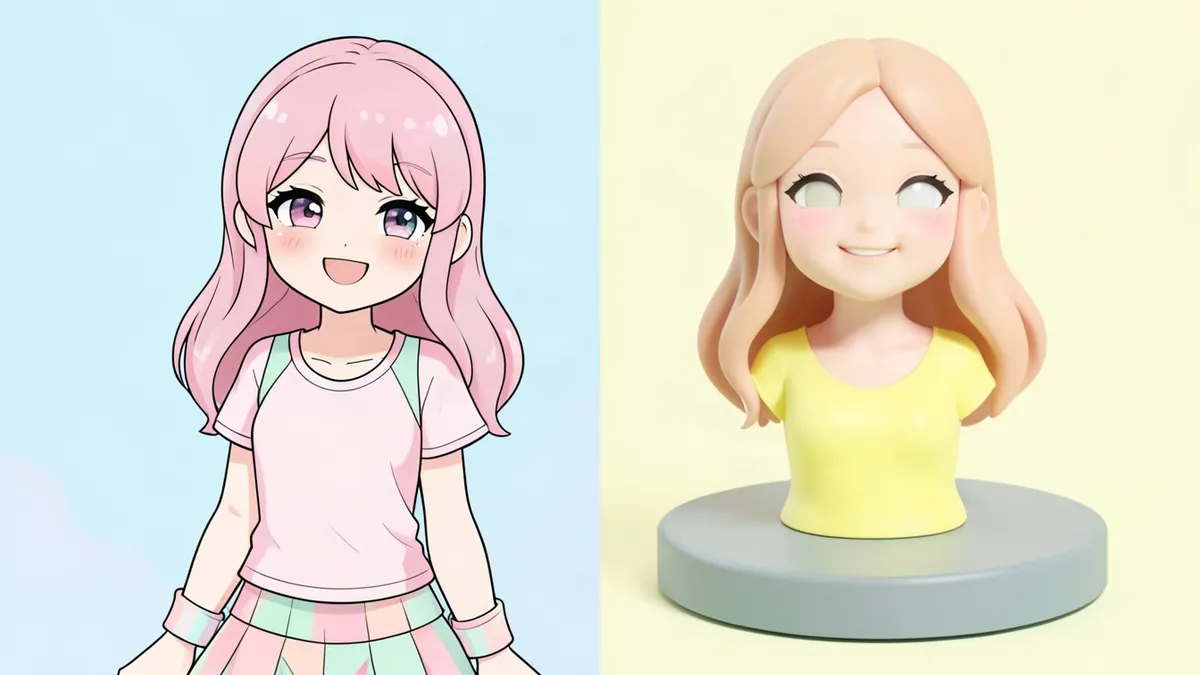
vtuber model
2d vtuber model
3d vtuber model
vtuber
What is a VTuber model?
Every model has two halves:
- The art. A drawing or a 3D sculpt of the character.
- The rig. The hidden controls that tell each part how to move when you turn your head, blink or talk.
Without a rig, the art is just an illustration. That's why the artist and the rigger are often two different people, priced separately.
2D VTuber models
A 2D VTuber model starts as one illustration drawn in many separate layers. The front hair, side hair and back hair are separate pieces. So are each eyelash, each iris, the eyebrows, the upper and lower lip, the neck and every part of the outfit that should swing.
A rigger loads that layered file into rigging software, most often Live2D Cubism, and bends the pieces so the flat drawing appears to turn and breathe. A tracking app such as VTube Studio then drives the finished model from your webcam.
2D models keep the hand-drawn anime look. The limit is range: the head turns only so far, and you rarely see the character from behind.
3D VTuber models
A 3D VTuber model is a mesh, a surface made of polygons, with painted textures on top and a skeleton of bones inside. Facial expressions are stored as blendshapes, which are saved face poses the software can mix together.
Many 3D models are saved as VRM files, a format made for humanoid avatars. VRoid Studio exports it. A 3D model can spin all the way around, raise its arms and, with extra tracking gear, move its whole body.
2D vs 3D at a glance
| 2D model | 3D model | |
|---|---|---|
| Looks like | A moving illustration | A game character |
| Built from | Layered drawing plus rig | Mesh, textures, bones |
| Movement | Head and upper body, limited angles | Full rotation, arms, sometimes full body |
| Cheapest start | Draw and rig it yourself | Free avatar creator apps |
Parts of a VTuber model
- Base art or mesh. The character in a neutral, front-facing pose.
- Tracking parameters. Head angle, body lean, eye open and close, eye direction, eyebrow height, mouth open and mouth shape.
- Physics. Automatic sway on hair, ears, tails, ribbons and sleeves.
- Expressions. Faces you trigger with a key, such as heart eyes, tears, a blush or an angry vein. Your tracked face can't produce these, so they're added by hand.
- Toggles. Switches that show, hide or swap a piece of the model.
What is a toggle on a VTuber model?
A toggle is an on and off switch tied to a hotkey. Press it and your character puts on glasses, takes off a jacket, pops out cat ears or holds a mug. On a 3D VTuber model, toggles are usually made with blendshapes or by showing and hiding parts of the mesh. On a 2D model, the rigger adds a control that fades layers in and out. Each toggle is extra art and extra rigging, so commissions usually price them one by one.
How to get a VTuber model
- Make it yourself. Free if you have the time. See how to make a VTuber model.
- Use a free model. Good for testing. Read free VTuber models first, because every free model has usage terms.
- Buy a premade model. Artists sell finished or semi-customizable models. Cheaper than custom, but other streamers may own the same one unless it's sold as a one-off.
- Commission a custom model. You give an artist a character design and get a model nobody else has.
What a custom commission involves
A custom VTuber model commission usually runs in this order: you send a reference sheet, the artist sketches, you approve, the artist finishes the layered art or the 3D sculpt, then a rigger takes over. Expect several weeks, and longer if the artist has a waiting list.
Prices vary a lot. Simple work from newer artists can cost tens to low hundreds of dollars. Detailed art with a professional rig can reach the thousands. The number depends on how much of the body is shown, how many expressions and toggles you want and how far the head needs to turn.
Before you pay, get the terms in writing: whether you can earn money while using the model, whether you get the source files, and who is allowed to edit it later.
You'll get a better quote with a clear design in hand. The VTuber Maker creates front-facing character art with a color palette and optional side and back views. It makes the design, not the rigged model, so think of it as the brief you hand to your artist.
FAQ
What is the difference between a 2D and a 3D VTuber model?
A 2D model is a layered illustration rigged to move, so it looks hand-drawn but only turns a little. A 3D model is a sculpted mesh with bones, so it can rotate fully and move its arms and body.
How much is a VTuber model?
Anywhere from free to several thousand dollars. Self-made models cost only time. Custom work ranges from tens of dollars to thousands for detailed art with a professional rig.
What is a toggle for a 3D VTuber model?
It's a hotkey switch that shows, hides or swaps part of the model, like glasses, a hat or an alternate outfit. On 3D models it's usually built with blendshapes or by hiding parts of the mesh.
Can I use a VTuber model without face tracking?
A rigged model needs tracking to move. If you don't want a camera, use a PNGTuber instead: a few still images that switch when your microphone picks up your voice.
Related Posts
Oct 10, 2026
PNGTuber vs VTuber: Differences, Costs and Which to Choose
PNGTuber vs VTuber: compare how they work, cost, setup, equipment and expressiveness, and find out which type of virtual streamer is right for you.
Oct 10, 2026
How to Become a VTuber: Beginner's Guide (Free and Paid)
How to become a VTuber: create your character, get a 2D or 3D model, set up face tracking and streaming software, and go live. Free and paid options.
Oct 10, 2026
200+ Character Personality Traits (Positive and Negative)
A list of 200+ character personality traits (positive, negative and neutral), plus how to choose traits and show them in believable characters.