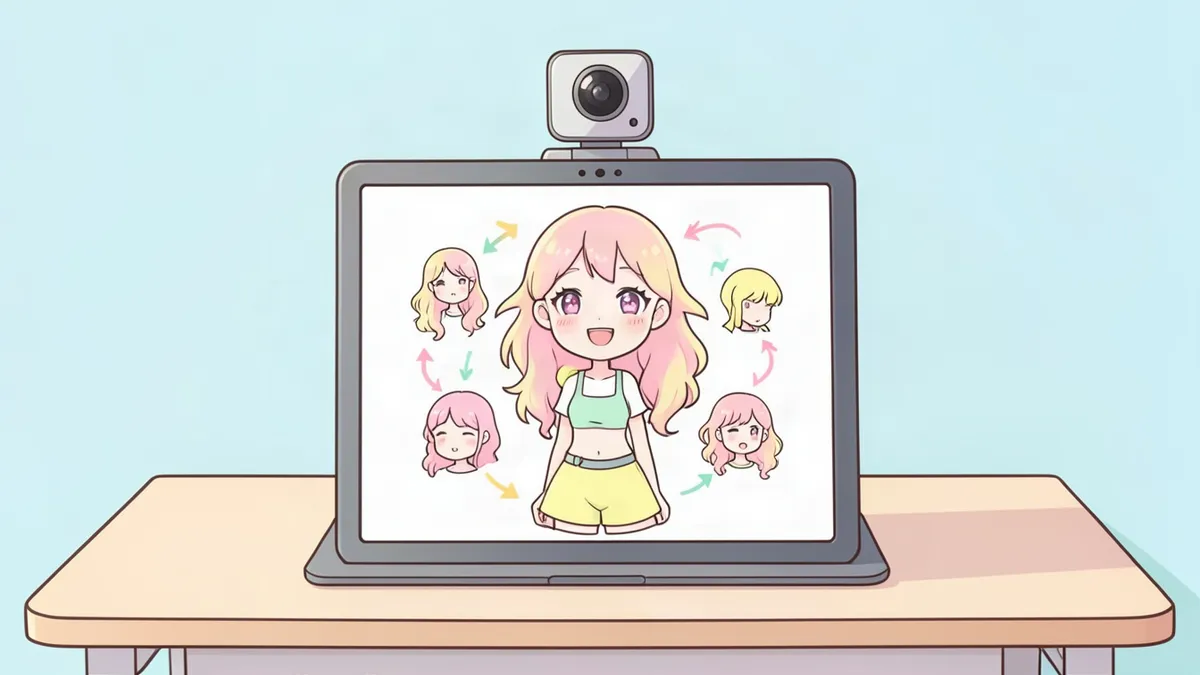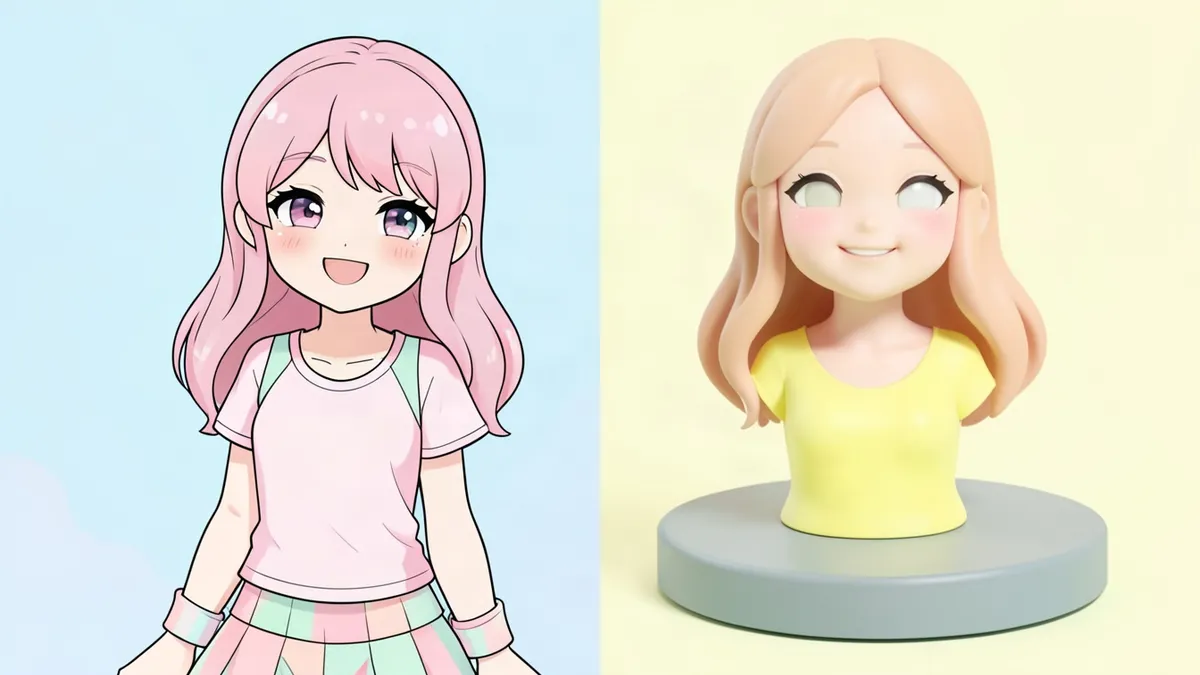
VTuber rigging is the work that turns a finished drawing or 3D sculpt into something that moves with your face. The art decides how your character looks. The rig decides whether it feels alive. This guide explains what a rigger does, step by step, for both 2D and 3D models.
What is a VTuber rig?
A rig is the set of controls built into a model. Each control, called a parameter, is a slider with a range. "Head angle X" goes from full left to full right. "Left eye open" goes from shut to wide.
Tracking software reads your face and sets those sliders many times per second. The rigger defines what the model looks like at every slider position, so any mix still looks right: head turned left, eyes half closed, mouth in an "o" shape.
How 2D VTuber rigging works
2D models are usually rigged in Live2D Cubism. The rigger never redraws the art. They bend it.
- Import the layered art. Every moving piece arrives on its own layer.
- Build meshes. Each piece gets a net of points. Moving the points warps the drawing.
- Add deformers. These are containers that bend or rotate groups of pieces together, such as the whole head or one lock of hair.
- Rig the eyes. Blink, smile-squint, wide-open, and eyeballs that follow your gaze.
- Rig the mouth. Open and closed, smile and frown, plus vowel shapes so speech looks right.
- Rig head and body angles. The pieces of a flat face are shifted and squashed to fake a turn. This is the hardest part and takes the longest.
- Add physics. Hair, ears, tails and ribbons get weight and bounce, so they lag behind movement and settle.
- Add expressions and toggles. Hotkey faces and items you can switch on and off.
- Export and test. The model is loaded into a tracking app such as VTube Studio and tuned against a real face.
How 3D VTuber rigging works
A 3D model already has depth, so nothing needs to be faked. The work is different:
- Build a skeleton. Bones for the spine, neck, head, arms, fingers and legs.
- Bind the mesh to the bones. Each part of the surface is told how much to follow each bone. This is called weight painting.
- Create blendshapes. These are saved face poses: blink, each vowel, joy, anger, sorrow. Tracking mixes them.
- Add secondary motion. Extra bones with spring settings make hair, tails and skirts swing.
- Set up the avatar file. For VRM models this includes mapping the bones and expressions so tracking apps understand them.
Models made in VRoid Studio come out already rigged, which is why that route is so quick.
Art has to be prepared for rigging
A rigger can only move what's been separated. For 2D, that means:
- Hair split into front, sides and back, with long strands on their own layers
- Eyes split into lashes, whites, iris and highlights
- Skin painted underneath hair and clothing so nothing is empty when parts shift
If you're commissioning art and rigging from different people, ask the rigger for their layer requirements before the artist starts.
What separates a good rig from a basic one
- Head turn range. A basic rig turns a little. An advanced one turns far and still looks right.
- Mouth shapes. A simple open and close flap versus distinct vowel shapes.
More range means more hours, and that's what drives rigging prices.
Should you rig it yourself?
Do it yourself if you enjoy technical puzzles and have a few weeks. Rigging software has free versions and plenty of community tutorials.
Hire a rigger if you'd rather spend the time streaming. Rigging is usually priced separately from the art. Simple rigs from newer riggers can cost in the low hundreds of dollars, and detailed professional rigs can cost thousands.
Whoever does it, agree in writing on what's included, how many revision rounds you get and whether you receive the project file. Without the project file, later changes have to go through the same rigger.
How to add a VTuber outfit later
A new outfit is new art plus new rigging. The artist draws the clothing in layers that line up with the existing body. The rigger then adds it either as a toggle on the current model or as a second version of the model that you switch to.
It goes smoothly when you have the original layered art and project file, and when your terms with the first artist and rigger allow someone else to edit their work. Check those terms before you commission the outfit.
Before you pay for rigging
Lock the design first. Changing a hairstyle after rigging means redoing that part of the rig. If you're still exploring looks, the VTuber Maker lets you try character designs before any model work begins. It makes design art only, not a rig. Then read the VTuber model guide and how to make a VTuber model for the stages before and after rigging.
FAQ
What does rigging a VTuber model mean?
It means adding the controls that let the model move: blinking, mouth shapes, head turns, body lean and hair physics. Tracking software then drives those controls from your face.
What software is used for VTuber rigging?
Most 2D models are rigged in Live2D Cubism. 3D models are rigged in general 3D modeling software, or come already rigged from an avatar creator such as VRoid Studio.
How long does it take to rig a VTuber model?
A simple 2D rig can take an experienced rigger a few days. A detailed rig with wide head turns and many toggles can take weeks. Your first one will take longer while you learn.
How much does a VTuber model and rigging cost?
It varies widely. Art and rigging are usually priced separately, and each can run from the low hundreds of dollars for simple work to thousands for detailed professional work.