Great character designs are recognizable at a glance. You could pick them out of a crowd from their shadow alone, and you'd guess something about their personality before they say a word. That isn't luck. It comes from a handful of design principles you can learn and use.
Here are the character design tips professional designers rely on, plus a simple process for designing your own character and a section on anime character design.
1. Start with who the character is
Design follows personality and story. Before you draw, write down:
- Their role (hero, mentor, rival, comic relief)
- Three personality traits
- Their world (fantasy, sci-fi, modern) and their job or daily life
- One thing they care about
Every visual choice should support these facts. A careful, organized character probably doesn't wear a torn, messy outfit, unless that contrast is the point.
If you haven't developed the character yet, start with our guide on how to make an OC.
2. Design a strong silhouette
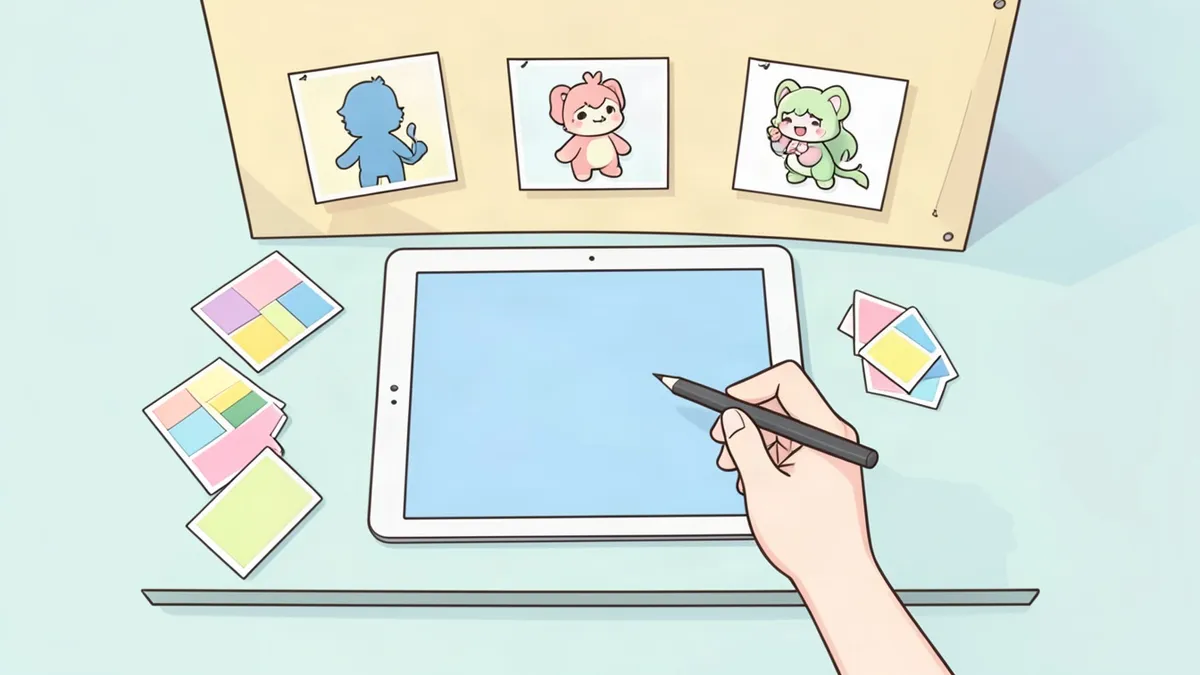
Fill your character in solid black. Can you still tell who it is? Strong silhouettes come from:
- Distinct hair shapes (a tall ponytail, spikes, a huge bun)
- Clothing shapes (a long coat, puffed sleeves, a cape, a wide hat)
- Accessories and props (a staff, a backpack, oversized headphones)
- Posture (slouched, upright, bouncy)
If your whole cast has similar silhouettes, change the proportions or add a defining shape to each.
3. Use shape language
Basic shapes carry feelings:
- Circles feel friendly, soft and approachable. Great for kind, cute or gentle characters.
- Squares feel stable, strong and reliable. Good for protectors and stubborn characters.
- Triangles feel dynamic, sharp or dangerous. Common for villains, rebels and energetic heroes.
Build the character from one dominant shape, then mix in a second shape for contrast. A round, friendly character with one sharp detail suggests they have an edge.
4. Choose a limited color palette
- Pick three to five main colors. Too many colors make a design look busy.
- Use one dominant color, one secondary color and one accent. The accent can highlight the face or a key accessory.
- Let color carry meaning. Warm colors (red, orange, yellow) feel energetic or passionate; cool colors (blue, green, purple) feel calm, mysterious or cold. Muted colors suggest a serious or worn character; saturated colors suggest a bright, bold one.
- Check value contrast. Turn your design grayscale. If everything is the same gray, add lighter and darker areas so it reads clearly.
5. Make the costume tell a story
Clothing is the easiest way to show a character's life:
- Job and lifestyle: practical boots for a traveler, ink-stained sleeves for a scholar
- Wealth: fabric quality, patches, jewelry
- Personality: neat or messy, practical or decorative
- History: a gift from someone important, an old uniform, a borrowed jacket
Ask "why does my character own this?" for every item. If you can answer, the item belongs.
6. Add one or two signature details
A signature detail is the thing people remember: a red scarf, a scar across the nose, mismatched gloves, a pet on their shoulder. Pick one or two and repeat them in every drawing. Too many signature details and none of them stand out.
7. Balance detail and simplicity
Put the most detail near the face, where people look first, and keep other areas simpler. If you'll draw the character often (in comics, animation or as a streamer avatar), simplify. Every detail has to be drawn again in every image.
8. Exaggerate proportions on purpose
Proportions say a lot: big heads and eyes read as young and cute, long legs read as elegant or heroic, broad shoulders read as strong. Pushing proportions slightly beyond realistic makes a design more expressive.
9. Design the cast together
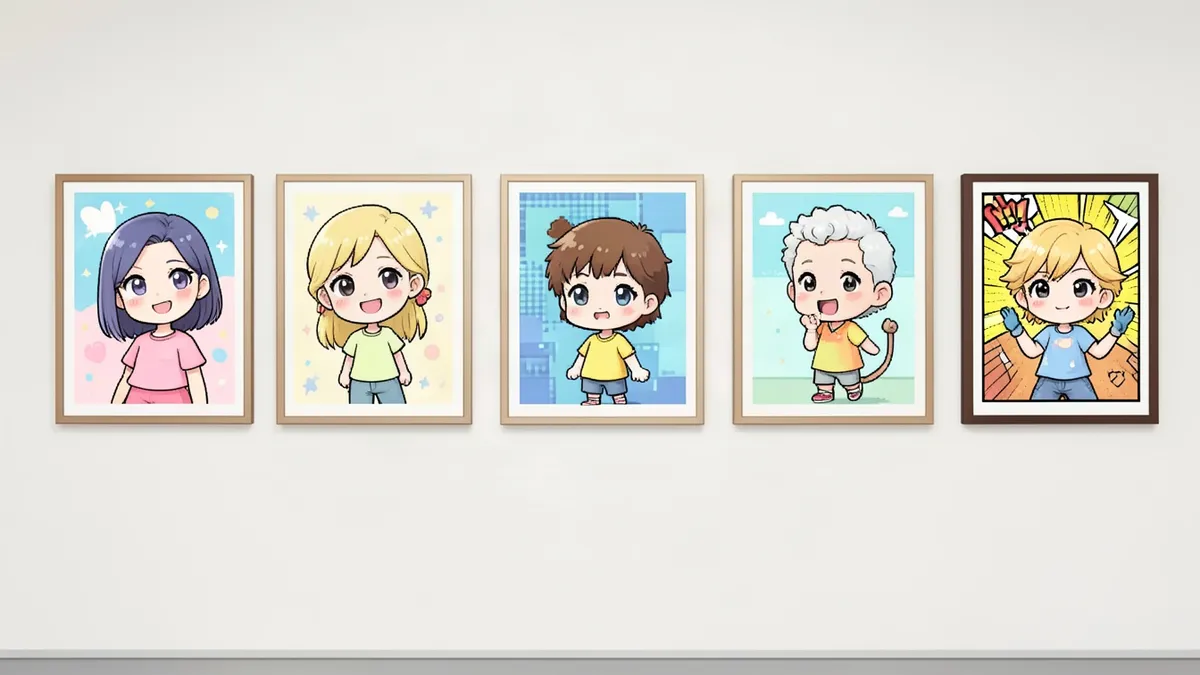
When you design several characters for the same story, line them up side by side. Make sure they differ in height, build, silhouette and color, but still feel like they belong in the same world.
10. Iterate
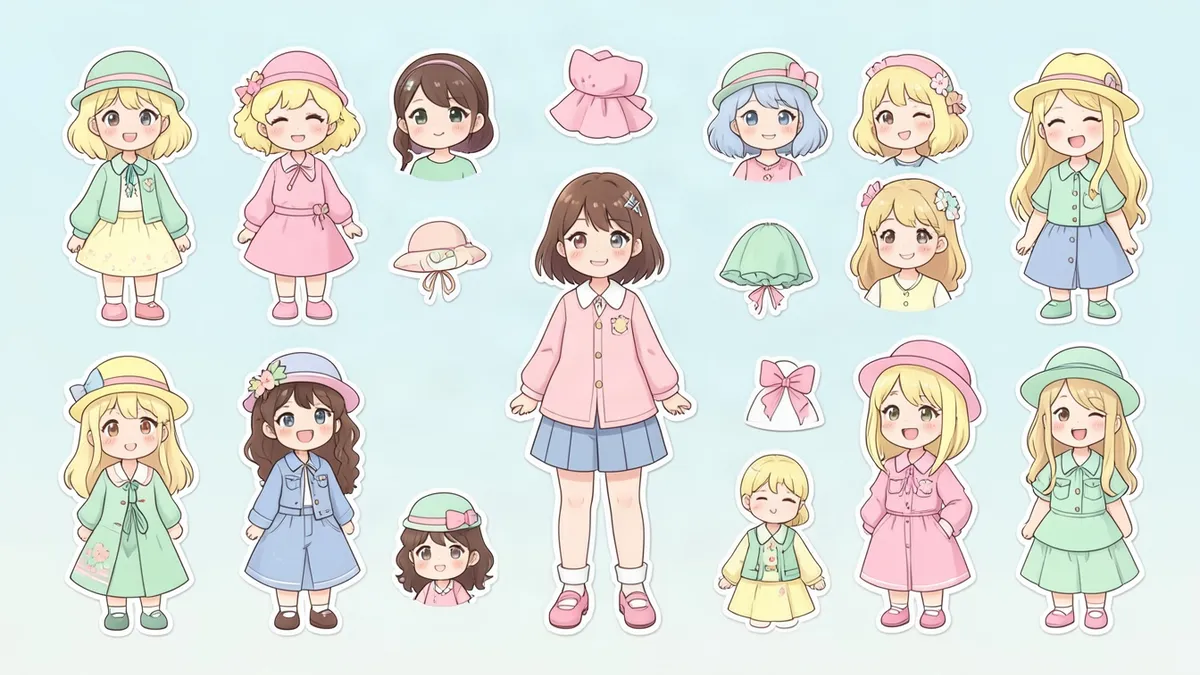
Your first design is rarely your best. Sketch quick variations: different hair, outfits and proportions. Pick the strongest elements from each. Designers often make dozens of thumbnails before choosing one.
A fast way to explore variations is to describe your character in the Character Creator and generate several versions, then combine the ideas you like in your own drawing.
Anime character design tips
Anime character design follows all the rules above, with a few style-specific habits:
- Hair does the heavy lifting. Distinct hair shapes and colors are the main way anime characters are told apart, since faces are drawn similarly.
- Eyes show personality. Large, round eyes read as innocent or cheerful; narrow, sharp eyes read as cool, serious or sly.
- Color coding is common. Characters often have a signature color that appears in their hair, eyes or outfit.
- Uniforms plus a twist. When characters share a uniform, each one customizes it: rolled sleeves, a hoodie underneath, an unusual accessory.
- Simplify for animation. Clean shapes and a limited number of details make a design easier to draw consistently.
Try the Anime Character Creator to explore anime designs, and our guide on how to draw anime characters to practice drawing them.
A quick character design process
- Write a short profile (role, traits, world).
- Collect references for clothing, hairstyles and props.
- Sketch 10 to 20 small silhouettes.
- Pick the best three and develop them.
- Test colors on the final design.
- Create a character reference sheet.
FAQ
What makes a good character design?
A clear silhouette, a limited color palette, a costume that tells a story and one or two memorable details, all supporting the character's personality.
How do I design a character if I can't draw?
Write a detailed description, collect reference images, and use a character creator to generate visual options. You can then refine the design or share it with an artist.
What is shape language in character design?
Shape language is the idea that basic shapes suggest feelings: circles feel friendly, squares feel stable and triangles feel dynamic or dangerous. Designers use these shapes to communicate personality.
How many colors should a character design have?
Three to five main colors is a good rule. Use one dominant color, one secondary color and one accent.