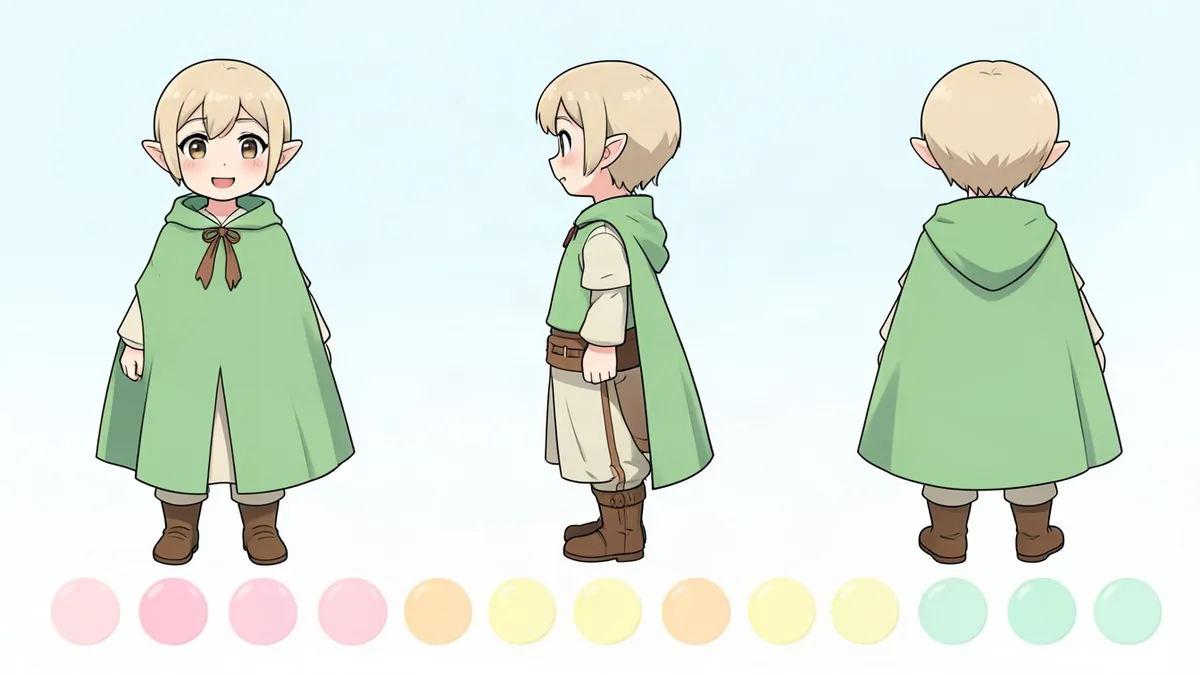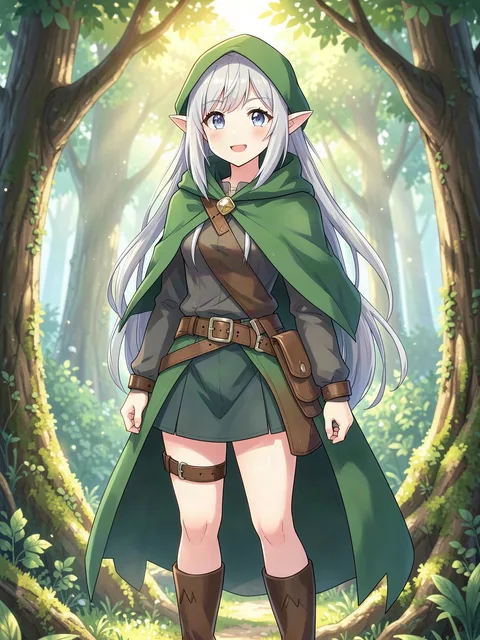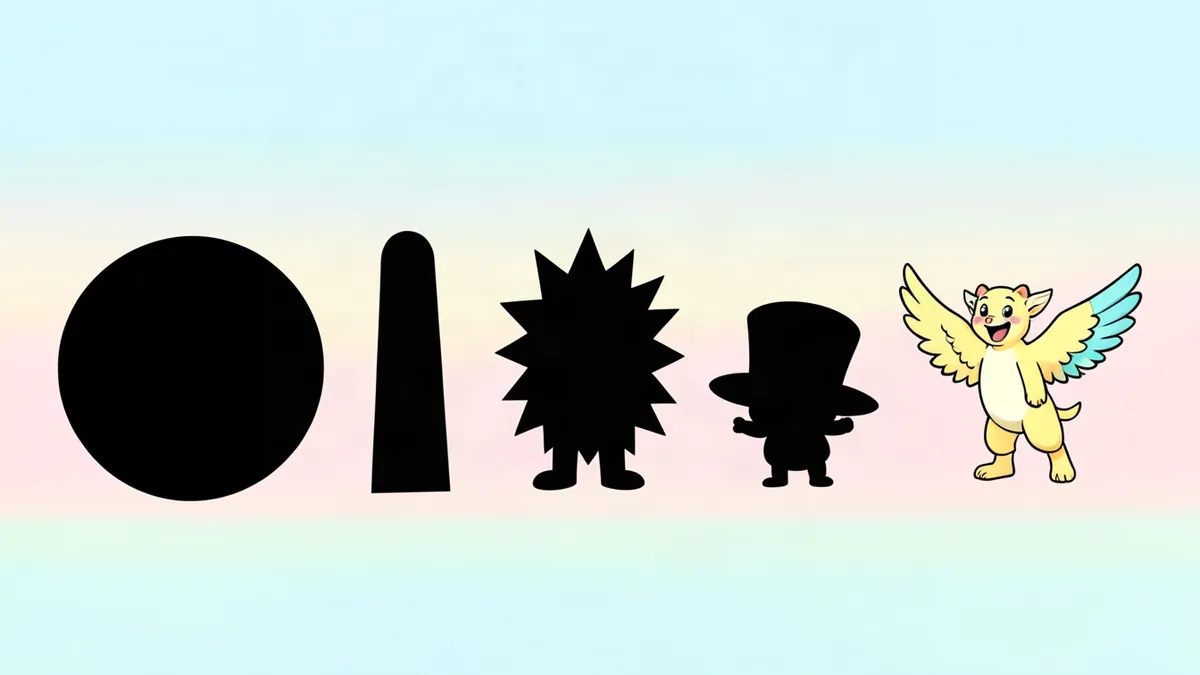
A character design silhouette is the solid outline of a character with every inside detail removed. If people can tell who it is, and guess something about their personality, from that black shape alone, the design is working. This guide shows you how to test a silhouette, six ways to strengthen one, and four drills to practice.
Why the outline comes first
- People read shape before anything else. At small sizes, at a distance or in motion, the outline is all a viewer gets.
- It separates the cast. Five characters with the same outline blur together no matter how different their colors are.
- It carries personality. Wide and square feels solid. Tall and narrow feels elegant or sly. Round feels friendly.
- It's fast to test. You can try twenty outlines in the time one detailed drawing takes.
The black-fill test
- Fill the character in solid black. On a screen, duplicate the layer and fill it. On paper, trace the outline on a new sheet and color it in with a marker.
- Shrink it. View it at the size of a postage stamp.
- Ask three questions. Can you find the head and hands? Can you tell what they're holding? Could you mix this shape up with anyone else in the cast?
- Show a friend for three seconds. Ask what kind of person they saw. If they say "a person," keep working.
Six ways to strengthen a character design silhouette
1. Open up negative space. Gaps between the arms and the body, between the legs, between hair and shoulders. When limbs fuse with the torso, the shape turns into a blob.
2. Use big, medium and small. One large mass such as a coat, one medium such as the hair, one small such as a prop. Shapes of equal size are dull.
3. Break the symmetry. One shoulder guard, a bag on one hip, hair swept to one side. A mirror-image outline looks stiff.
4. Push one feature too far. Make the hat taller, the sleeves wider or the ponytail longer than feels safe. Then check the fill again. It's usually better.
5. Put identity on the edge. Details inside the outline vanish in a silhouette. A badge on the chest doesn't help. A scarf that sticks out does.
6. Mix straight and curved edges. A straight back against a curved cape, or a round body with a sharp collar, gives the eye something to follow.
Pose matters too
A good design can still fail in a bad pose. When you draw the character doing something, turn them so the action shows in the outline. Someone pouring tea reads clearly from the side, with the pot and cup in open space. From the front, the pot overlaps the body and disappears. Animators call this staging, and the black-fill test works for poses as well as designs.
Common mistakes
- Arms pinned to the sides. Lift them a little, or give the hands something to do.
- A cloak that hides everything. A closed cloak is a rectangle. Open it, shape the hem, or let one arm come through.
- Relying on color. If two characters differ only by hair color, they're the same silhouette.
- One body type for the whole cast. Vary height, width and posture.
- Spikes everywhere. An outline that's busy all the way around has no focus. Keep some edges quiet so the loud ones stand out.
Four drills
- 20 in 20. With a fat brush or marker, paint 20 small black figures in 20 minutes. No lines, only shapes. Circle the three you'd want to see more of.
- Cast lineup. Draw all your characters as black shapes, side by side, at their relative heights. Change whatever looks alike.
- One outline, three characters. Take a single silhouette and design three different people inside it. You'll see how much the outline decides before you add a face.
- Prop only. Make five characters you could tell apart by the shape of what they carry.
Where this fits in the process
Silhouettes are the thumbnail stage of character concept art, before faces, colors and costume details. For the other design principles, such as shape language, palette and costume, read our character design tips. And for prompts to practice on, try these character design ideas.
If you want quick material to test, describe a character in the Character Creator, generate a few versions, and run the black-fill test on each one. The version that still reads at stamp size is the one to develop.
FAQ
What is a silhouette in character design?
It's the character's outline filled with a single flat color, usually black. Designers use it to check whether a character is recognizable by shape alone.
How do I test my character's silhouette?
Fill the drawing in black, shrink it to thumbnail size and see whether you can still identify the character, the pose and what they're holding.
Why do designers start with silhouettes?
Outlines are quick to draw and easy to compare, so you can try many ideas before spending time on details. A design that works as a shape is easier to finish.
Does silhouette matter in simple or anime styles?
Yes, even more. When faces are drawn alike, hair shape, clothing shape and props are what tell characters apart.